


What is the sampling rate of a Cylinder Air Leakage Testing Machine?
As a supplier of Cylinder Air Leakage Testing Machines, I often encounter questions from customers regarding various technical specifications of our products. One of the frequently asked questions is about the sampling rate of these machines. In this blog post, I will delve into the concept of the sampling rate of a Cylinder Air Leakage Testing Machine, its importance, and how it impacts the overall testing process.
Understanding the Sampling Rate
The sampling rate of a Cylinder Air Leakage Testing Machine refers to the frequency at which the machine takes measurements during the testing process. It is typically measured in samples per second (SPS). For example, a sampling rate of 100 SPS means that the machine takes 100 measurements every second.
The sampling rate is a crucial parameter because it determines the level of detail and accuracy that can be achieved in the leakage testing. A higher sampling rate allows for more frequent measurements, which can capture rapid changes in pressure or flow that may indicate a leak. On the other hand, a lower sampling rate may miss these transient events, leading to inaccurate test results.
Importance of the Sampling Rate
-
Accuracy of Leak Detection
A high sampling rate is essential for detecting small leaks accurately. Small leaks may cause only minor fluctuations in pressure or flow, which can be easily missed if the sampling rate is too low. By taking measurements at a high frequency, the machine can detect these subtle changes and provide a more accurate assessment of the cylinder's airtightness. -
Real - Time Monitoring
In many industrial applications, real - time monitoring of cylinder leakage is required. A high sampling rate enables the machine to provide up - to - date information on the cylinder's condition, allowing operators to take immediate action if a leak is detected. This is particularly important in applications where safety is a concern, such as in the storage and transportation of liquefied petroleum gas (LPG). -
Compliance with Standards
Many industries have strict standards and regulations regarding cylinder air leakage testing. These standards often specify the minimum sampling rate that must be used to ensure accurate and reliable testing. By using a Cylinder Air Leakage Testing Machine with an appropriate sampling rate, companies can ensure compliance with these standards and avoid potential legal issues.
Factors Affecting the Sampling Rate
-
Type of Leakage Test
Different types of leakage tests may require different sampling rates. For example, a pressure decay test, which measures the change in pressure over time, may require a higher sampling rate than a flow - based test. This is because pressure changes can occur very rapidly, especially in the case of a large leak, and a high sampling rate is needed to capture these changes accurately. -
Cylinder Size and Volume
The size and volume of the cylinder being tested can also affect the sampling rate. Larger cylinders may require a lower sampling rate because the pressure or flow changes are more gradual. In contrast, smaller cylinders may experience more rapid changes, and a higher sampling rate may be necessary to detect leaks accurately. -
Desired Level of Accuracy
The level of accuracy required for the leakage test will also influence the sampling rate. If a very high level of accuracy is needed, such as in critical applications where even a small leak can have serious consequences, a higher sampling rate should be used.
Choosing the Right Sampling Rate
When choosing a Cylinder Air Leakage Testing Machine, it is important to consider the specific requirements of your application. Here are some guidelines to help you select the appropriate sampling rate:

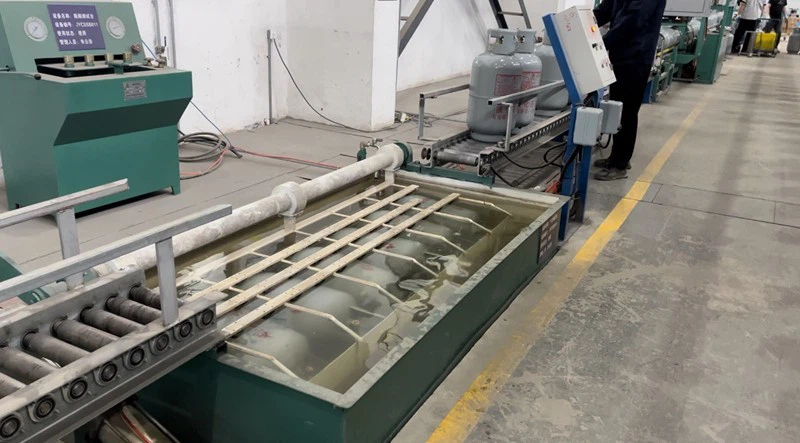
- Understand Your Testing Needs
Determine the type of leakage test you will be performing, the size and volume of the cylinders you will be testing, and the level of accuracy required. This will give you a better idea of the sampling rate that is suitable for your application. - Consult with the Manufacturer
As a supplier, we have extensive experience in the field of cylinder leakage testing. We can provide you with expert advice on choosing the right sampling rate based on your specific needs. Our team of engineers can also help you customize the testing machine to meet your exact requirements. - Consider Future Expansion
If you plan to expand your testing capabilities in the future, it may be wise to choose a machine with a higher sampling rate than you currently need. This will allow you to handle more complex testing scenarios without having to replace the machine.
Related Equipment in Cylinder Inspection
In addition to Cylinder Air Leakage Testing Machines, we also offer a range of other equipment for cylinder inspection. For example, our LPG Cylinder Residual Liquid Recovery Equipment is designed to safely and efficiently recover residual liquid from LPG cylinders. Our LPG Cylinder Air Tightness Test Machine provides a comprehensive solution for testing the airtightness of LPG cylinders, and our LPG Cylinder Valve Disassembling Machine is used for disassembling and assembling cylinder valves.
Contact for Purchase and Negotiation
If you are interested in our Cylinder Air Leakage Testing Machines or any of our other cylinder inspection equipment, we encourage you to contact us for further information. Our sales team is ready to assist you in choosing the right equipment for your needs and to discuss the details of the purchase. Whether you are a small business or a large industrial enterprise, we can provide you with high - quality products and excellent customer service.
References
- "Handbook of Pressure Vessel Design and Testing", John Wiley & Sons, Inc.
- "Industrial Leak Testing: Principles and Applications", Elsevier Science Publishing Co., Inc.
- Industry standards and regulations related to cylinder air leakage testing.


