


Hey there! I'm a supplier of CNG cylinder inspection equipment, and today I wanna chat about a super important question: Can CNG cylinder inspection equipment detect micro - cracks?
First off, let's understand why detecting micro - cracks in CNG cylinders is a big deal. CNG cylinders store compressed natural gas under high pressure. Even a tiny micro - crack can grow over time due to pressure fluctuations, temperature changes, and mechanical stress. If left undetected, these cracks can lead to gas leaks, which are not only a waste of fuel but also pose a huge safety risk. We're talking about potential explosions and fires here, so it's no joke.
Now, let's dig into the types of CNG cylinder inspection equipment we've got and how they deal with micro - cracks.
One of the most common methods is visual inspection. It might sound simple, but it's a crucial first step. Inspectors use their eyes and sometimes magnifying tools to look for any visible signs of damage on the surface of the cylinder. However, micro - cracks are, well, micro. They're so small that they're often invisible to the naked eye. So, while visual inspection can catch some obvious problems, it's not enough on its own to detect micro - cracks.
Then there's ultrasonic testing. This is a pretty cool technology. Ultrasonic testing equipment sends high - frequency sound waves into the cylinder. When these waves encounter a crack, they bounce back differently than when they travel through solid material. By analyzing these echoes, inspectors can figure out if there are any internal flaws, including micro - cracks. The accuracy of ultrasonic testing depends on a few factors, like the skill of the operator and the quality of the equipment. High - end ultrasonic testing machines can detect very small cracks, but they still have limitations. For example, the orientation of the crack can affect how well it's detected. If a micro - crack is parallel to the direction of the sound waves, it might be harder to pick up.
Another popular method is magnetic particle testing. This works on ferromagnetic materials, which many CNG cylinders are made of. The cylinder is magnetized, and then iron particles are applied to the surface. If there's a crack, the magnetic field is disrupted at the location of the crack, and the iron particles will cluster around it, making the crack visible. Magnetic particle testing is great for detecting surface and near - surface micro - cracks. But it has its drawbacks too. It only works on ferromagnetic materials, and it can't detect cracks that are deep inside the cylinder.
Eddy current testing is also in the mix. It uses electromagnetic induction to detect flaws in conductive materials. When an alternating current is passed through a coil near the cylinder, it creates an eddy current in the cylinder. Any change in the eddy current, like when it encounters a crack, can be detected. Eddy current testing is really good at detecting surface and near - surface cracks, especially in non - ferromagnetic materials. But similar to other methods, it has limitations in detecting deeper micro - cracks.
So, to answer the question, yes, CNG cylinder inspection equipment can detect micro - cracks, but it's not always a slam - dunk. Each method has its strengths and weaknesses, and in many cases, a combination of different inspection techniques is needed to get a more accurate picture.
Now, let's talk about our products. As a supplier, we offer a range of high - quality CNG cylinder inspection equipment. For example, our Residual Natural Gas Recovery Equipment for CNG Cylinder is designed to safely and efficiently recover the remaining natural gas in the cylinder before inspection. This not only saves resources but also makes the inspection process safer. Our Residual Liquid Pouring Equipment for CNG Cylinders helps remove any residual liquids inside the cylinder, which can affect the accuracy of the inspection. And our Valve Disassembling Machine for CNG Cylinder makes it easy to take apart the valves for a thorough inspection.
When it comes to detecting micro - cracks, our inspection equipment uses the latest technologies to maximize the chances of finding these tiny but dangerous flaws. We're constantly working on improving our products to stay ahead of the game. Our R & D team is always researching new methods and technologies to make our equipment more accurate and reliable.
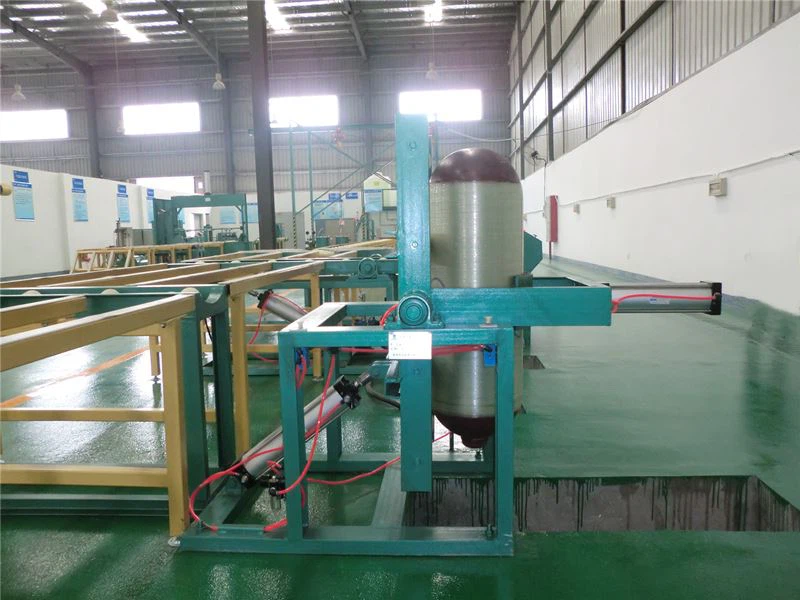

If you're in the business of CNG cylinder inspection or maintenance, having the right equipment is essential. You need equipment that can detect micro - cracks and other hidden flaws to ensure the safety of your cylinders and the people using them. And that's where we come in. We're here to provide you with top - notch CNG cylinder inspection equipment that you can trust.
Whether you're a small - scale operation or a large - scale industrial facility, we've got the solutions for you. Our equipment is easy to use, cost - effective, and most importantly, reliable. We also offer excellent after - sales service, so you can have peace of mind knowing that we'll be there to support you if you have any questions or issues.
If you're interested in learning more about our products or have any questions about CNG cylinder inspection, don't hesitate to reach out. We're always happy to have a chat and help you find the best equipment for your needs. Let's work together to make CNG cylinder inspection safer and more efficient.
References:
- "Non - Destructive Testing Handbook" by the American Society for Nondestructive Testing
- Industry reports on CNG cylinder safety and inspection technologies


