


Hey there! As a supplier of CNG cylinder inspection equipment, I'm super stoked to dive into how magnetic particle CNG cylinder inspection equipment functions. This tech is crucial in keeping CNG cylinders safe and sound, so let's get right into it.

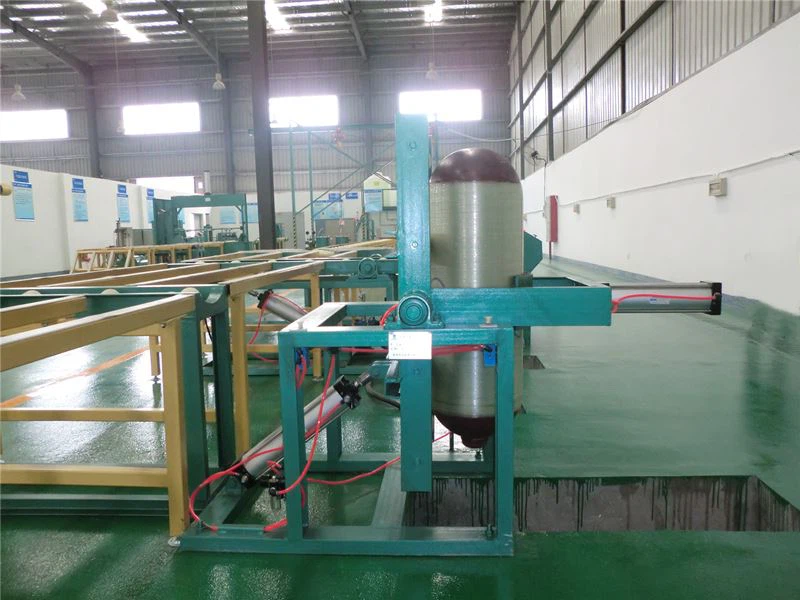
First off, let's understand why we even need to inspect CNG cylinders. CNG, or compressed natural gas, is a popular fuel source because it's clean and cost - effective. But CNG cylinders are under a lot of pressure. Over time, they can develop cracks, which can be extremely dangerous. That's where magnetic particle inspection comes in.
The basic principle behind magnetic particle CNG cylinder inspection equipment is pretty cool. It's based on the fact that when a magnetic field is applied to a ferromagnetic material (like the steel used in most CNG cylinders), any surface or near - surface cracks will disrupt the magnetic field. This disruption creates a magnetic leakage field at the crack site.
So, how does the equipment actually work? Well, the first step is to magnetize the CNG cylinder. There are a couple of ways to do this. One common method is using a yoke. The yoke is a handheld device that has two poles. When you place the yoke on the surface of the cylinder and turn it on, it creates a magnetic field in the area between the poles. Another way is using a coil. The cylinder is placed inside the coil, and when an electric current passes through the coil, it generates a magnetic field around the cylinder.
Once the cylinder is magnetized, the next step is to apply magnetic particles. These particles are usually in the form of a dry powder or a liquid suspension. If it's a dry powder, it can be dusted over the surface of the cylinder. The magnetic particles are attracted to the areas where there's a magnetic leakage field, which is where the cracks are. They form visible indications on the surface of the cylinder, kind of like a little powder trail that shows where the crack is.
If a liquid suspension is used, it's sprayed or poured onto the cylinder. The liquid helps the magnetic particles move more easily and adhere better to the surface. After the liquid dries, the magnetic particles that have gathered at the crack sites are clearly visible.
Now, let's talk about some of the benefits of using magnetic particle inspection equipment. One of the biggest advantages is its sensitivity. It can detect very small cracks, even ones that are just a few millimeters long. This means that potential problems can be caught early, before they become serious safety hazards.
Another great thing is that it's relatively quick and easy to use. Compared to some other inspection methods, like ultrasonic testing which requires a lot of training and expertise to interpret the results, magnetic particle inspection can be done by a trained operator with a relatively short learning curve.
It's also a non - destructive testing method. That means you can inspect the CNG cylinder without damaging it. After the inspection is done, the cylinder can still be used as long as it passes the inspection.
But like any technology, magnetic particle inspection also has its limitations. For example, it can only detect surface and near - surface cracks. If a crack is deep inside the cylinder, it might not be detected by this method. Also, the surface of the cylinder needs to be relatively clean and smooth for accurate results. If there's a lot of dirt, rust, or paint on the surface, it can interfere with the magnetic field and make it harder to detect cracks.
Now, as a supplier of CNG cylinder inspection equipment, we offer a range of products that work in conjunction with magnetic particle inspection. For example, we have Residual Natural Gas Recovery Equipment for CNG Cylinder. Before you start inspecting a CNG cylinder, you need to make sure there's no residual natural gas in it. This equipment helps safely recover the remaining gas, so you can work on the cylinder without any risk of explosion.
We also have Valve Disassembling Machine for CNG Cylinder. The valves on CNG cylinders need to be inspected and maintained regularly. This machine makes it easy to disassemble the valves for inspection and cleaning.
And then there's Residual Liquid Pouring Equipment for CNG Cylinders. Sometimes, there can be residual liquids inside the CNG cylinders, like water or oil. This equipment helps safely drain and collect these liquids before the inspection.
If you're in the business of CNG cylinder inspection or you're responsible for maintaining a fleet of CNG vehicles, having the right equipment is essential. Our magnetic particle CNG cylinder inspection equipment, along with our other complementary products, can help you ensure the safety and reliability of your CNG cylinders.
If you're interested in learning more about our products or want to discuss your specific needs, don't hesitate to reach out. We're always happy to have a chat and see how we can help you with your CNG cylinder inspection requirements. Whether you're a small - scale operator or a large - scale industrial client, we've got the solutions for you. Let's work together to keep your CNG cylinders in top - notch condition!
References
- ASME Boiler and Pressure Vessel Code Section V: Non - destructive Examination
- API 579 - 1/ASME FFS - 1: Fitness - for - Service
- ISO 11623: Compressed natural gas (CNG) fuel systems for vehicles – Safety requirements


